MGA Faculty Q&A: Dr. Storm Murray on the Surprising Depths of Horror Literature
Author: Sheron Smith
Posted: Friday, October 16, 2026 12:00 AM
Categories:
Pressroom | School of Arts and Letters | Faculty/Staff
Macon, GA
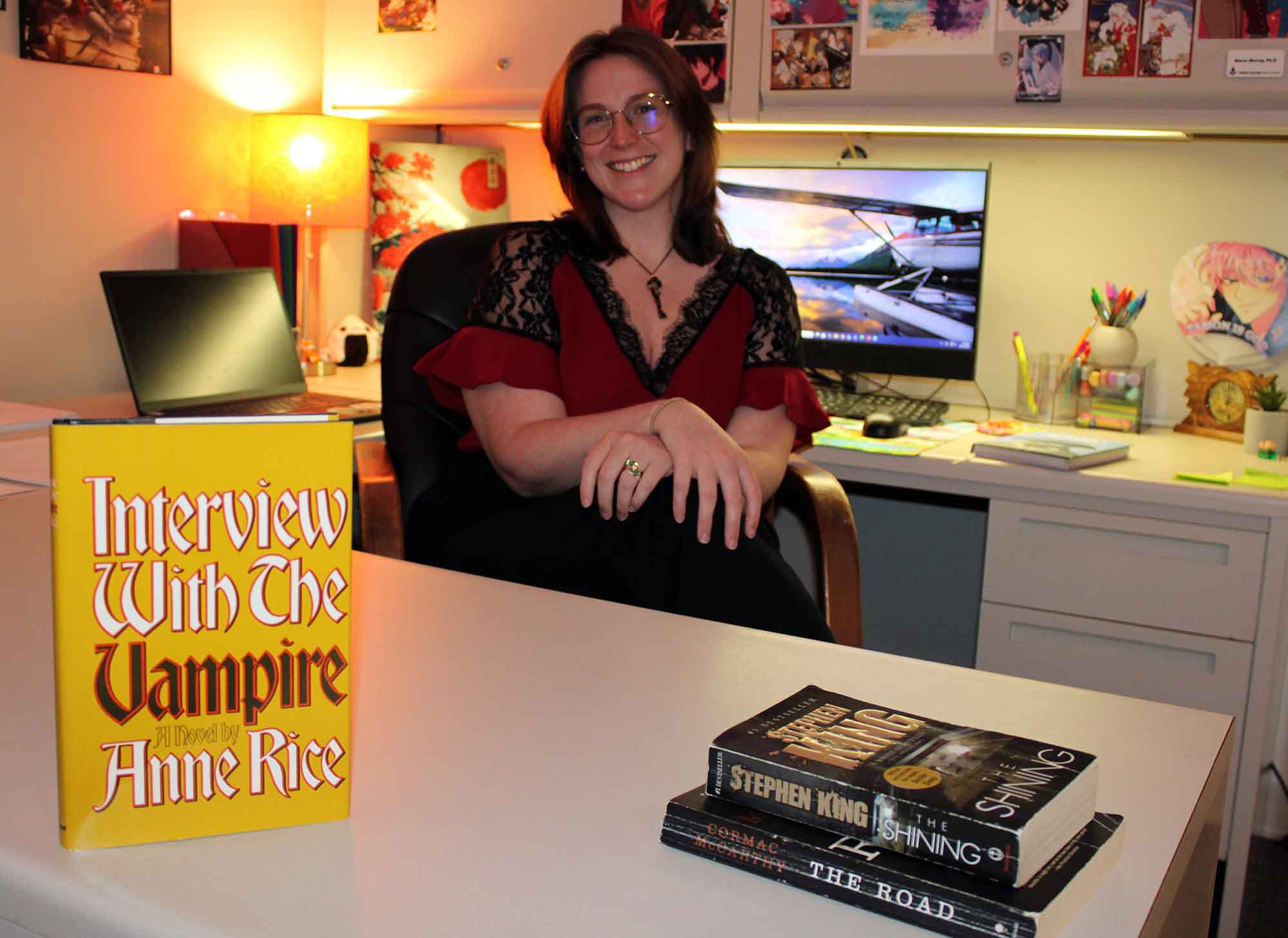
Dr. Storm Murray
As Halloween approaches, it’s a good time to revisit the stories that keep us looking over our shoulders. In this faculty Q&A, MGA professor Dr. Storm Murray recommends three novels that use the darker side of storytelling to explore some very human questions about love, morality, addiction, and survival. Even readers who think horror isn’t for them might find something unexpected.
What three works of horror literature would you recommend to someone who thinks they don't like horror, and what might surprise them about each one?
Horror as a genre is often associated with images of supernatural creatures, terrifying monsters, graphic violence, gore, and jump scares, so it’s easy to understand why someone might decide it isn’t for them. However, I think that dismissing horror means overlooking some of the genre’s most compelling explorations of addiction, morality, love, and human nature. With that said, if I wanted to convince someone who thinks they don't like horror to give the genre a try, I would recommend three novels that combine frightening settings and characters with profound, sometimes devastating explorations of the human experience: Stephen King’s The Shining, Anne Rice’s Interview with the Vampire, and Cormac McCarthy’s The Road.
The Shining
Stephen King’s The Shining is arguably the most recognizable novel on this list, thanks to the film adaptation directed by Stanley Kubrick and starring Jack Nicholson and Shelley Duvall. However, as beloved as the movie is, the novel offers a different take on supernatural horror. The story follows Jack Torrance, a struggling writer and recovering alcoholic, who has taken a job as the winter caretaker of the Overlook Hotel, isolating himself and his family to the remote Colorado Rockies. On the surface, the story is about a haunted hotel, but the novel’s horror has as much to do with the deterioration of a family as it does with the supernatural forces surrounding them. Jack himself is struggling with alcoholism, anger, and his own sense of failure. As the hotel begins to exert its influence over him, his wife and young son find themselves trapped with someone who is becoming increasingly dangerous. The terror of The Shining comes from witnessing a father and husband becoming someone his family can no longer recognize, revealing that love alone cannot always save someone from their own destructive impulses. King’s supernatural elements intensify this emotional conflict, grounding the novel’s horror in recognizable human vulnerabilities. In this way, the haunted house becomes a representation of a family home in which the things everyone has tried to ignore can no longer remain hidden.
Interview with the Vampire
Whereas Stephen King’s The Shining uses supernatural horror to explore the deterioration of a family, Anne Rice’s Interview with the Vampire uses the vampire myth to examine the emotional and psychological costs of immortality. The novel follows Louis de Pointe du Lac, a young plantation owner in eighteenth-century Louisiana who becomes a vampire and struggles to reconcile his desire for human connection with his growing need to kill to survive. The story unfolds through Louis’s interview with a young journalist, as he recounts centuries of love, loss, and conflict with his fellow vampire, Lestat, and the young vampire Claudia, whom they raise together. Throughout his account, Louis wrestles with whether he can remain a good person while committing acts he considers evil, while his immortality forces him to confront the loneliness of outliving the people he loves. Louis's experience reflects a broader feature of Rice's characterization: rather than serving simply as terrifying supernatural creatures, Rice’s vampires are introspective, emotionally complex figures whose struggles with guilt, identity, and morality reflect questions that extend beyond their immortal existence. Through Louis’s search for meaning and his struggle to reconcile his conscience with his nature, Rice transforms the vampire myth into an exploration of what it means to live with the consequences of our choices.
The Road
Cormac McCarthy's The Road offers a stark, deeply unsettling vision of horror that relies less on supernatural forces than on the possibility of humanity’s collapse. The novel follows an unnamed father and his young son as they travel through a devastated American landscape in the aftermath of an unspecified catastrophe, struggling to survive in a world where food is scarce, the environment is dying, and other survivors may pose the greatest threat. Desperate to protect his son, the father teaches him to be wary of strangers while trying to preserve his capacity for compassion in a world that offers few reasons to be kind. However, throughout their journey, both the father and the reader must confront the possibility that survival may require acts and choices that compromise the very goodness the father and son are trying to preserve. McCarthy’s spare prose and bleak imagery create an atmosphere of relentless dread, yet the emotional center of the novel is the bond between father and son. Their love becomes a fragile source of hope in a world stripped of nearly everything that once made life meaningful. Beneath its apocalyptic setting and disturbing depictions of human cruelty, The Road explores the fear of losing someone you love while asking readers to consider what it means to remain compassionate when survival itself threatens to erode our humanity.
Final Thoughts
My undergraduate advisor told me many years ago, “The darkest stories teach us the most important lessons because they give us examples of what not to do,” and this sentiment is exactly why reading horror – and reading, in general – is so crucial. Novels like The Shining, Interview with the Vampire, and The Road compel us to confront the darker aspects of human nature, showing how fear, obsession, and desperation can lead to devastating consequences while revealing the resilience and compassion that can help us overcome them.
For someone who believes they dislike horror, I would argue that the genre’s greatest value lies in its ability to use fear and discomfort to help us see the world (and ourselves) more clearly. We might begin a horror novel wondering what is lurking in the dark, only to find ourselves reflecting on our own fears, moral limitations, and the uncomfortable truths we might otherwise avoid. At its best, horror is not simply about what frightens us, but why it frightens us and what those fears reveal about our humanity. Whether exploring the consequences of unchecked ambition, the complexities of love and morality, or the lengths to which people will go to survive, horror offers a distinctive lens through which to examine the human experience.
Dr. Storm Murray is an assistant professor of English at Middle Georgia State University (MGA). With a concentration in rhetoric and composition, her research focuses on the intersection of fandom studies and writing studies. Her current research project explores the ways that fan communities help develop participants’ literacy practices. At MGA, she teaches courses in composition, rhetoric, and professional and technical writing.